
Things to Do in Hanoi in August
August weather, activities, events & insider tips
Low Season · Budget Friendly
August Weather in Hanoi
Long-run averages for August
90°F (32°C)
High Temp
78°F (26°C)
Low Temp
12.2 inches (310 mm)
Rainfall
85%
Humidity
15
Rainy Days
10
Sunny-Day UV
⚠ Tropical storms and occasional typhoon remnants can track through northern Vietnam in August. They bring sustained heavy rain, strong winds, and multi-day disruptions to boat services on Ha Long Bay and coastal areas. Monitor weather forecasts starting a week before arrival. Build flexibility into any plans that depend on water-based activities.
⚠ Flash flooding in the Old Quarter and other low-lying Hanoi neighborhoods happens multiple times during August after heavy downpours. Streets can flood to knee depth within thirty minutes. Motorbike taxis become hazardous on submerged roads where open drains and potholes are invisible under the water. Stay on elevated sidewalks during active flooding. Avoid wading through standing water, which can carry urban runoff.
⚠ Dengue fever transmission rises during the wet season. Standing water from monsoon rains creates mosquito breeding habitat across the city. Use DEET-based repellent consistently. Apply it around dawn and dusk. Consider accommodation with screened windows. Functioning air conditioning helps too. Sleep with windows closed.
Is August Right for You?
Weigh the advantages and considerations before booking
Advantages
- + International tourist numbers hit their annual low. The Temple of Literature, Ho Chi Minh Mausoleum complex, and the narrow lanes of the Old Quarter all feel closer to how locals experience them. You can walk the length of Hang Bong Street at midday without threading through tour groups. The line for Ho Chi Minh's mausoleum, which snakes around Ba Dinh Square for over an hour in peak season, shrinks to a manageable wait.
- + Accommodation rates across Hanoi drop noticeably from the October through December peak. Better rooms appear on shorter notice. Upgrading from a basic guesthouse to something with proper air conditioning and a quiet courtyard becomes surprisingly affordable. The savings are real enough to redirect toward an overnight trip to Ninh Binh or a Ha Long Bay cruise.
- + The landscape surrounding Hanoi reaches its most intensely green state in August. Rice paddies in the Red River Delta flood and turn electric. The karst peaks around Tam Coc stand wrapped in low-hanging mist after each storm. The city's own lakes, West Lake and Hoan Kiem, sit at their fullest. If you care about photography, this saturated monsoon palette is difficult to replicate in drier months.
- + Late August marks the beginning of com season. Young green rice harvested from paddy fields just outside the city is toasted and flattened into delicate flakes that taste faintly of grass and jasmine. Street vendors along Hang Than and near West Lake wrap com in fresh lotus leaves. The fragrance is unmistakable, sweet and vegetal and slightly warm. This is a Hanoian obsession, not a tourist product. It appears for only a few weeks before the rice matures past the right stage.
Considerations
- − August is Hanoi's wettest month. The rain is not the gentle drizzle you might picture. Storms arrive fast, usually mid-afternoon, dumping water in curtains thick enough to reduce visibility to a block. The Old Quarter's narrow streets flood ankle-deep within minutes because the colonial-era drainage was never built for this volume. You will get caught in at least one downpour that sends you ducking into a doorway for twenty minutes.
- − The combination of 32°C (90°F) heat and 85% humidity creates a blanket of wet air that clings to your skin the moment you step outside. The effective temperature feels significantly hotter than the thermometer reads. Physical exertion like climbing to the top of the Hanoi Flag Tower or walking the Long Bien Bridge becomes draining by mid-morning. Air conditioning in cafes and museums stops being a luxury. It becomes a survival strategy.
- − Tropical storms occasionally track through the Gulf of Tonkin in August. When they do, Ha Long Bay boat trips cancel entirely, sometimes for two or three consecutive days. Road conditions on the highway to Sapa or the mountain routes west of Hanoi can deteriorate rapidly. These disruptions are not guaranteed. They happen often enough that you need flexible backup plans rather than a rigid itinerary.
Best Activities in August
Top things to do during your visit
August in Hanoi is the wettest month of the year, with average highs around 32°C and rainfall reaching 310 millimeters. The rain does not fall as an all-day grey curtain the way it does in northern Europe. Instead, Hanoi's August storms arrive in theatrical afternoon deluges that hammer tin rooftops for thirty or forty minutes, send rivers of warm water down the narrow Old Quarter alleys, and then vanish, leaving the pavement steaming and the air thick with the smell of wet stone and overripe jackfruit. Mornings tend to be hotter and drier, and the locals know this. The streets around Hoàn Kiếm Lake fill before seven with tai chi practitioners, phở vendors ladling broth fragrant with star anise and charred ginger, and motorbike couriers weaving through the still-tolerable heat. By mid-afternoon, the sky bruises over and the city pauses. Shopkeepers pull corrugated shutters halfway down. Café owners drag tables inward. Then the rain hits, warm and vertical, and the whole cycle resets. For travelers willing to work around the weather rather than against it, August rewards with noticeably thinner crowds at major sites and lower rates at Hanoi's hotels, from the colonial-era properties around the French Quarter to the newer towers near West Lake. The Old Quarter at night, after the rain has passed and the neon from bia hơi corners reflects off slick pavement, is Hanoi at its most photogenic. The air is finally cool enough to sit on a plastic stool with a cold draught beer and a plate of bún chả without wilting. The evening food stalls along Tống Duy Tân and the lanes behind St. Joseph's Cathedral come alive once the heat breaks, smoke rising from charcoal grills loaded with pork patties, the sizzle audible half a block away. Hanoi in August also sits between the major Vietnamese holidays, which means the city runs at its working rhythm. Offices are open, family-run workshops in craft villages keep regular hours, and day-trip destinations like Ninh Bình and Hạ Long Bay operate at a more relaxed pace than during the autumn festival season. The key to enjoying this month is simple. Start early, retreat during the afternoon storms, and emerge again for the long, warm evenings when the capital feels most alive.

Best Seller-Private Full-Day Tour to Ninh Binh Depart from Hanoi
day_tripThe drive south from Hanoi to Ninh Bình Province takes roughly two hours and deposits you in a landscape that looks nothing like the capital. Limestone karsts rise sheer from flooded rice paddies, their bases swallowed by still green water where farmers pole flat-bottomed boats between the columns. This full-day private tour covers the essential circuit: the Tràng A grottoes, where your sampan glides through low-ceilinged caves dripping with cool condensation and emerges into sunlit valleys sealed off by cliffs. The Bích Động pagoda complex cut into a hillside. And Mua Cave, whose 500 stone steps reward with an aerial view of the karst field stretching to the horizon. The smell of wet limestone and river mud follows you all day, and the silence on the water, broken only by the drip of the oar, is the sharpest contrast to Hanoi's horn-heavy streets.
Ninh Bình is the single most dramatic landscape within day-trip range of Hanoi, and a private tour lets you sequence the sites to dodge the midday tour-bus crush at Tràng An.
Insider tip: Ask your guide to schedule Mua Cave first, arriving by nine in the morning, when the steps are still shaded and the viewing platform is nearly empty. By noon the staircase becomes a slow queue in full sun.
This month: August rainfall keeps the Tràng A waterways at their highest level, which means the sampans pass deeper into the cave systems than during the dry months, and the surrounding rice paddies are at peak green, making the landscape more vivid from the Mua Cave overlook.

Hanoi Motorbike Tour: Hanoi HIGHTLIGHTS & HIDDEN GEMS
guided_experienceHanoi was built for motorbikes in the way Venice was built for boats, and the only way to understand the city's circulatory system is from a saddle. This guided motorbike tour puts you on the back of a Honda driven by a local rider who narrates the route through an earpiece while threading through the Old Quarter's one-way maze, past the Long Biên Bridge with its rusted French-colonial ironwork, along the shore of West Lake where incense smoke drifts from Trấn Quốc Pagoda, and into residential lanes where the tour buses physically cannot fit. You stop to eat where your driver eats: egg coffee thick as custard at a second-floor café with peeling shutters on Nguyễn Hữu Huân, crispy bánh mì from a cart where the bread is still warm and the pâté tastes of five-spice. The sensory overload is the point. Charcoal smoke, two-stroke exhaust, frangipani from courtyard trees, the clatter of ceramic bowls being stacked at a phở stall, the cool tunnel of air as you pass under a banyan canopy. This is Hanoi at its rawest tempo.
A motorbike tour compresses what would take three days on foot into a single morning or evening, reaching neighborhoods and street-food stops that walking tours and taxis skip entirely.
Insider tip: Book the evening departure. After the afternoon rain clears, the streets are cooler, the neon reflects off wet asphalt, and the night-market energy around Hàng Đào and Đồng Xuân is at full volume.

Hanoi Knife-Making Class:Join the Legacy in Blacksmith's Workshop
otherIn the village of Đa Sỹ, on the southwestern edge of Hanoi, blacksmithing families have forged blades for more than a thousand years, and this workshop class puts you at an anvil alongside one of those lineages. You start with a billet of carbon steel, heated in a coal forge until it glows orange, and you hammer it, fold it, quench it in oil that hisses and sends up an acrid plume, and grind the edge on a wet stone until you can shave paper. The heat from the forge is fierce, the clang of hammer on anvil rings in your chest, and the cold tang of steel filings hangs in the air. You leave with a finished knife, your name etched on the blade, and an understanding of why Vietnamese kitchen knives, with their thin spines and acute edges, cut differently from Western chef's knives. This is not a sanitized craft demo. Your hands will be soot-black and your forearms will ache.
Đa Sỹ is one of the oldest continuously operating blade-forging villages in Southeast Asia, and this class is the only structured way for visitors to work the forges alongside resident smiths.
Insider tip: Wear closed-toe shoes and clothes you do not mind ruining. The forge throws sparks, and the quench oil spatters. Long sleeves in natural fiber, not synthetic, protect your arms without melting.
This month: The workshop is indoors and covered, so August rain does not affect the class itself, though the drive to Đa Sỹ can slow in heavy downpours.

Noi Bai Airport transfer to Hanoi Hotel & Vice versa
transportNội Bài International Airport sits roughly 25 kilometers north of central Hanoi, and the ride into the city passes through a landscape of construction cranes, fish ponds, and banana groves before hitting the Nhật Tân Bridge, a cable-stayed span that delivers you across the Red River with a wide view of the city skyline. A pre-booked private transfer eliminates the taxi-queue negotiation, the metered-fare anxiety, and the language barrier that can turn a simple airport run into a forty-minute standoff. The driver meets you in the arrivals hall with a name sign, handles luggage, and delivers you to your hotel door, which in the Old Quarter's labyrinthine alleys can mean parking on a main road and walking the last fifty meters down a lane so narrow your shoulders nearly brush the walls on both sides. Coming back, the pickup works in reverse, with the driver navigating to your hotel's exact alley entrance. In a city where address-finding is a genuine skill, this is not a luxury but a practical necessity.
A fixed-rate private transfer between Nội Bài Airport and central Hanoi removes the single most stressful logistical moment of arriving in a new city, after a long-haul flight landing at midnight.
Insider tip: Confirm your hotel's exact alley address, not just the street name, with the transfer company in advance. Hanoi's Old Quarter hotels often sit down lanes that do not appear on standard maps, and drivers unfamiliar with the neighborhood can circle for twenty minutes.
This month: August afternoon storms can cause localized flooding on the airport highway near the Đông Anh interchange, which occasionally adds fifteen to twenty minutes to the transfer. Allow extra buffer for afternoon flights.

Ha Long Bay Luxury Day Cruise with Buffet Lunch, Caves & Kayaking
adventureHạ Long Bay is roughly a three-hour drive east of Hanoi, and this day cruise covers the essential experience: a buffet lunch on board while the boat threads between karst towers topped with scrub jungle, a guided walk through one of the illuminated limestone caves where stalactites drip into still pools, and a kayaking session in a sheltered lagoon where the water is so calm you can see jellyfish pulsing beneath the hull. The bay is enormous, over 1,500 square kilometers, and the cruise route matters more than the bay itself. This itinerary favors the less-trafficked Lan Hạ side, where the karst islands are closer together, the water is clearer, and the floating fishing villages still have working boats rather than souvenir stalls. Lunch runs toward Vietnamese standards: grilled squid with a char on the edges, steamed clams in lemongrass broth, and fresh spring rolls with herbs you pick from a shared plate. The salt air, the slap of small waves against the hull, and the mineral smell of the caves stay with you long after the drive back.
Hạ Long Bay is a UNESCO World Heritage landscape with no real equivalent elsewhere in Southeast Asia, and a day cruise is the most efficient way to experience it from Hanoi without committing to an overnight boat.
Insider tip: Bring a dry bag for your phone and camera. The kayaking segment involves low-clearance cave passages where water drips steadily from the ceiling, and the transfer between the main boat and the kayak launch can get splashy.
This month: August is within Hạ Long Bay's monsoon season, and the cruise operator may alter the route or cancel kayaking if seas are rough. Fog and low cloud can obscure the upper karsts. But also lend the bay an ink-wash atmosphere that clear-sky days lack. Check cancellation terms before booking.

Hanoi Cooking Class Learning 5 Dishes including Banh Xeo
foodHanoi's food identity is built on a small number of dishes executed with obsessive precision, and this cooking class teaches five of them, including bánh xèo, the sizzling turmeric-yellow crepe filled with shrimp, pork, and bean sprouts that cracks audibly when you fold it. The class begins at a wet market where the instructor walks you through the ingredient logic: which herbs are for eating raw and which are for cooking, why Hanoi cooks insist on a specific thickness of rice noodle, how to smell a ripe green papaya versus an unripe one. Back in the kitchen, you prepare each dish from scratch, and the sequence is designed so that while one element rests or marinates, you start the next. The smell of caramelized fish sauce in a clay pot, the feel of rice-paper dough spreading across a hot cloth stretched over a steaming pot, the sharp bite of raw perilla leaf against rich pork: this class treats Hanoi food as a technical discipline, not a performance. You eat everything you cook, seated at a shared table, and the recipes travel home with you in a format precise enough to replicate.
Learning to cook bánh xèo and other Hanoian staples in the city where they originated, with market-sourced ingredients, teaches technique and palate in a way no cookbook or video can.
Insider tip: Eat a light breakfast or skip it entirely. The class produces five full dishes, and you eat all of them. Arriving hungry means you enjoy the meal rather than forcing it.
Where to Stay in Hanoi in August
Hand-picked hotels across price tiers for August travellers.
★★★★
Mid-Range
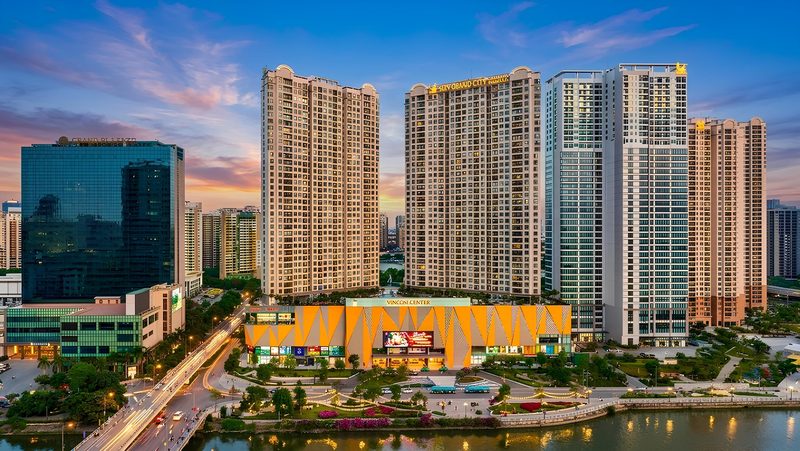
Luxury Serviced Apartment Vinhomes D’Capitale Hanoi – Zen Homes
From $32 / night
Check Prices on Trip.com →
Packing Checklist
Bookmark this page — your progress is saved between visits
Need the full list with shopping links?
Climate-specific gear, brand recommendations, and what to leave at home.
View Hanoi Packing List →Essential Tips
Insider knowledge and common pitfalls to avoid
Insider Knowledge
Hanoi's rhythm shifts dramatically in August, and the travelers who enjoy this month most are the ones who adopt the local schedule rather than fighting it. Hanoians wake early and eat early, the pho stalls on Ly Quoc Su and the bun cha grills near Hang Manh are in full swing by 6:30 AM when the air is still bearable. By 11 AM, the city slows down. Smart locals disappear into air-conditioned cafes or nap through the hottest hours, and you should do the same. The afternoon storm window, roughly 2 PM to 5 PM, is your cue to be indoors at a museum, a coffee shop, or a spa. The city wakes up again after 6 PM, and the best evening eating and drinking happens between 7 and 10 PM when the wet pavement reflects the Old Quarter's neon signs and the temperature drops just enough to make sitting outside tolerable.
Com, the green rice flakes, hits the streets in late August. Do not pass it up. Vendors carry it in banana-leaf bundles on bicycle panniers. The fresh version, still slightly warm from the toasting pan, has a texture and grassy sweetness that disappears within hours of preparation. Look for it near the West Lake area and along Hang Than Street. Com mixed into che, the sweet soup dessert, or pressed into banh com, a mung-bean cake wrapped in green-rice coating, are the two preparations worth seeking out. This is seasonal food that Hanoians themselves get excited about. It has no equivalent outside northern Vietnam.
Bia hoi, the fresh draft beer brewed daily and served from metal kegs at sidewalk intersections, is Hanoi's most democratic social institution. August evenings are when it peaks. The beer is light, low-alcohol, and served barely cold in small glasses that you refill constantly. The best clusters of bia hoi stalls sit at the intersection of Ta Hien and Luong Ngoc Quyen in the Old Quarter and along the north shore of West Lake near Quang An. You sit on a plastic stool roughly 20 cm (8 inches) off the ground. Traffic passes close enough to feel the breeze off motorbikes. The clatter of glasses and shouted toasts in Vietnamese create a soundscape that no rooftop bar in the city can replicate. Bia hoi is brewed fresh each morning and runs out by late evening. Arriving after 9 PM risks finding kegs empty.
Ghost Month affects local behavior in ways that can benefit travelers. Many Vietnamese avoid major purchases and travel during the seventh lunar month. Domestic tourism to Hanoi dips alongside international numbers. Restaurants and markets catering primarily to locals are less crowded. The general pace of the city slows. The sidewalk joss-paper fires that appear after dusk are not random. They are families sending offerings to ancestors. Walking carefully around them rather than through them is a basic courtesy that Hanoians notice and appreciate. If someone offers you a piece of fruit from a street altar, accepting it politely is considered bringing good luck.
Avoid These Mistakes
Scheduling a rigid outdoor itinerary and then losing half the day to frustration when the afternoon storm arrives is a rookie mistake. August rain in Hanoi is not a disruption. It is a structural feature of the day. The travelers who have a good time are the ones who build indoor activities into the 2 PM to 5 PM window and treat the downpour as a scheduled intermission rather than a catastrophe. Sitting in a cafe doorway watching the Old Quarter flood while drinking ca phe trung is, for whatever reason, one of the most memorable parts of August in Hanoi.
Wearing cotton everything and wondering why you feel miserable by noon is avoidable. At 85% humidity, cotton absorbs sweat and rain alike and refuses to dry. It creates a clammy second skin that chafes and smells within hours. First-timers show up in jeans and cotton t-shirts and switch to quick-dry synthetics by day two. Do yourself the favor of packing right from the start. Linen works too, though it wrinkles the moment you look at it.
Assuming Ha Long Bay is a guaranteed day trip in August is unwise. Tropical weather systems in the Gulf of Tonkin can cancel all boat departures for two or three consecutive days with little advance warning. If Ha Long Bay is the anchor of your trip, either build buffer days around it or accept that you might need to pivot entirely. Overnight cruises handle moderate weather better than speedboat day trips. Operators with larger vessels tend to cancel less frequently. Nobody sails in a tropical storm regardless of boat size.
Ready to plan your trip to Hanoi?
Now that you've got the research covered, here's where to go next.
Explore More Activities in Hanoi
Didn't see anything interesting yet?
Browse Viator's full catalog of tours, day trips, food experiences, and private guides in Hanoi.
See All Hanoi Tours on Viator